Kutse
| Dokumendiregister | Sotsiaalministeerium |
| Viit | 1.5-8/1350-1 |
| Registreeritud | 25.05.2026 |
| Sünkroonitud | 26.05.2026 |
| Liik | Sissetulev kiri |
| Funktsioon | 1.5 Asjaajamine. Info- ja kommunikatsioonitehnoloogia arendus ja haldus |
| Sari | 1.5-8 Tervitus- ja tutvustuskirjad, kutsed ja kirjavahetus seminaridel, konverentsidel jt üritustel osalemiseks |
| Toimik | 1.5-8/2026 |
| Juurdepääsupiirang | Avalik |
| Adressaat | EURO CEH |
| Saabumis/saatmisviis | EURO CEH |
| Vastutaja | Agne Nettan-Sepp (Sotsiaalministeerium, Kantsleri vastutusvaldkond, Euroopa Liidu ja väliskoostöö osakond) |
| Originaal | Ava uues aknas |
| Taotle dokumendi eemaldamist või parandamist |
Failid
|
Tähelepanu!
Tegemist on välisvõrgust saabunud kirjaga. |
For Russian version, please scroll down. Текст письма на русском языке приводится ниже
To:
Members of the European Environment and Health Task Force (EHTF);
WHO National Counterparts;
Registered participants;
Cc:
WHO Representatives and Heads of Country Offices;
WHO Secretariat;
Dear colleagues,
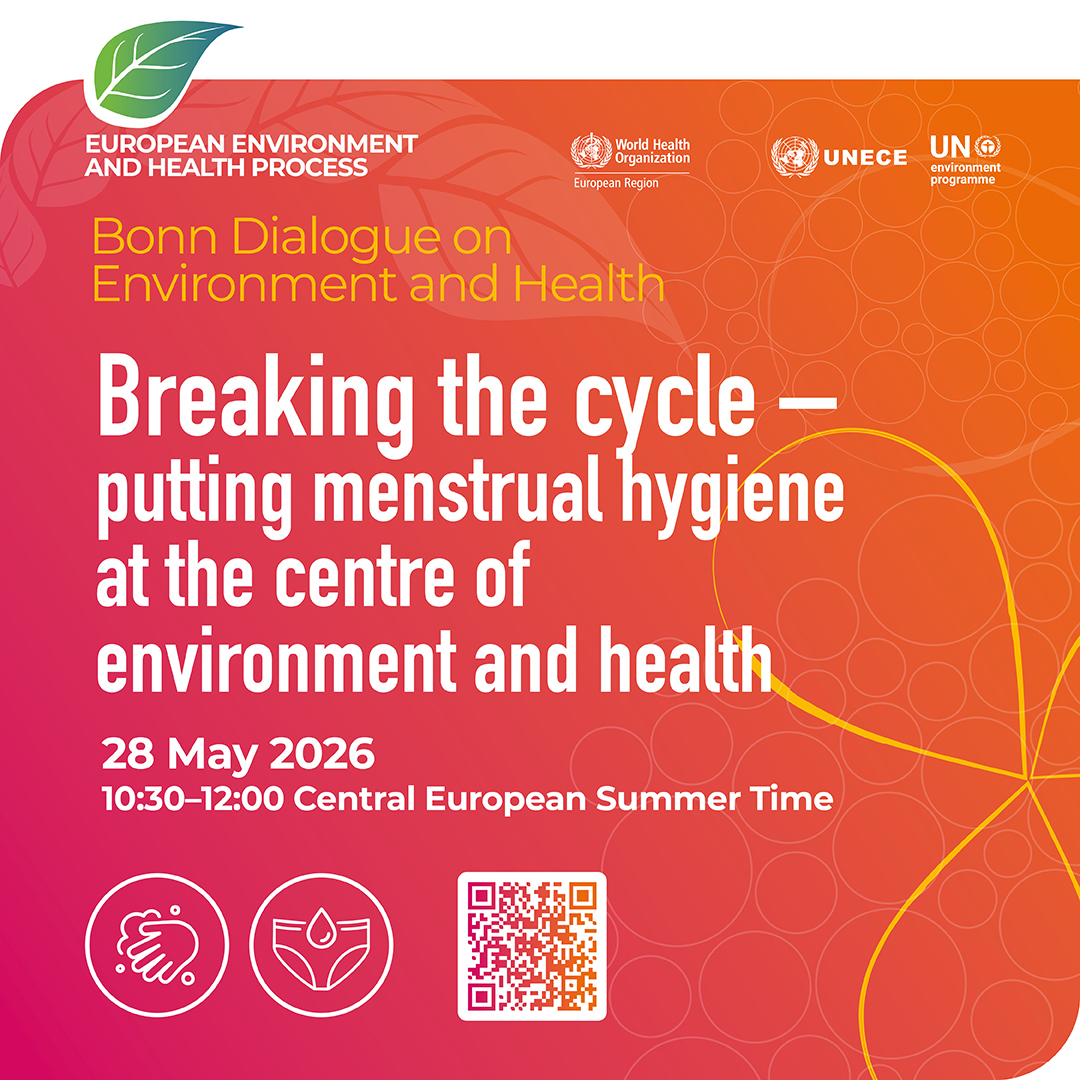
We are pleased to remind you that the eleventh Bonn Dialogue on Environment and Health will take place on Thursday, 📅 28 May 2026 ⏰ from 10:30 to 12:00 CEST, on Menstrual Hygiene Day.
This Dialogue will focus on how environment and health policies can better support menstrual health and create more equitable environments.
You can join the event via Zoom by registering here: https://who.zoom.us/meeting/register/OgTukgPhSTSn238z-GYJ_w#/registration
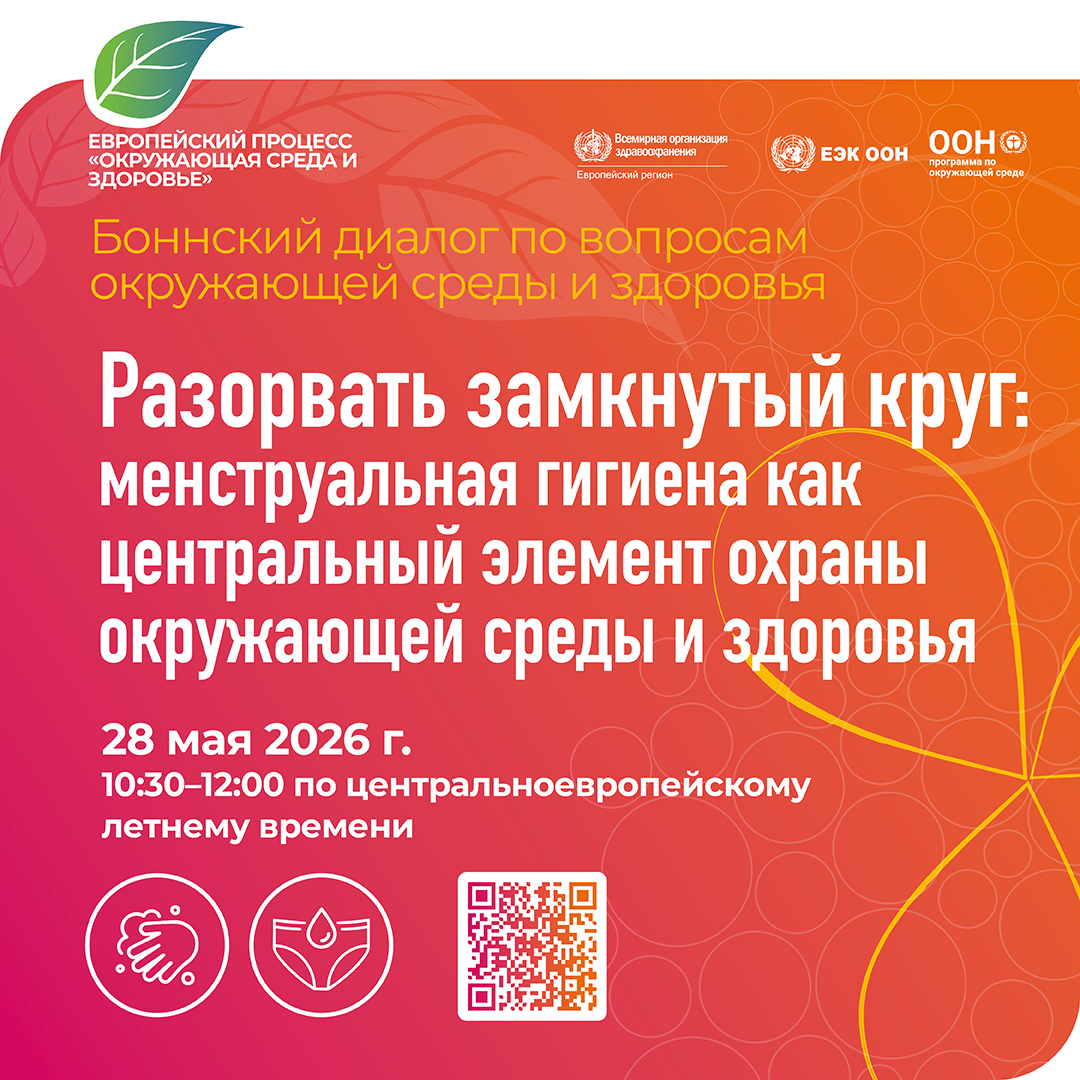
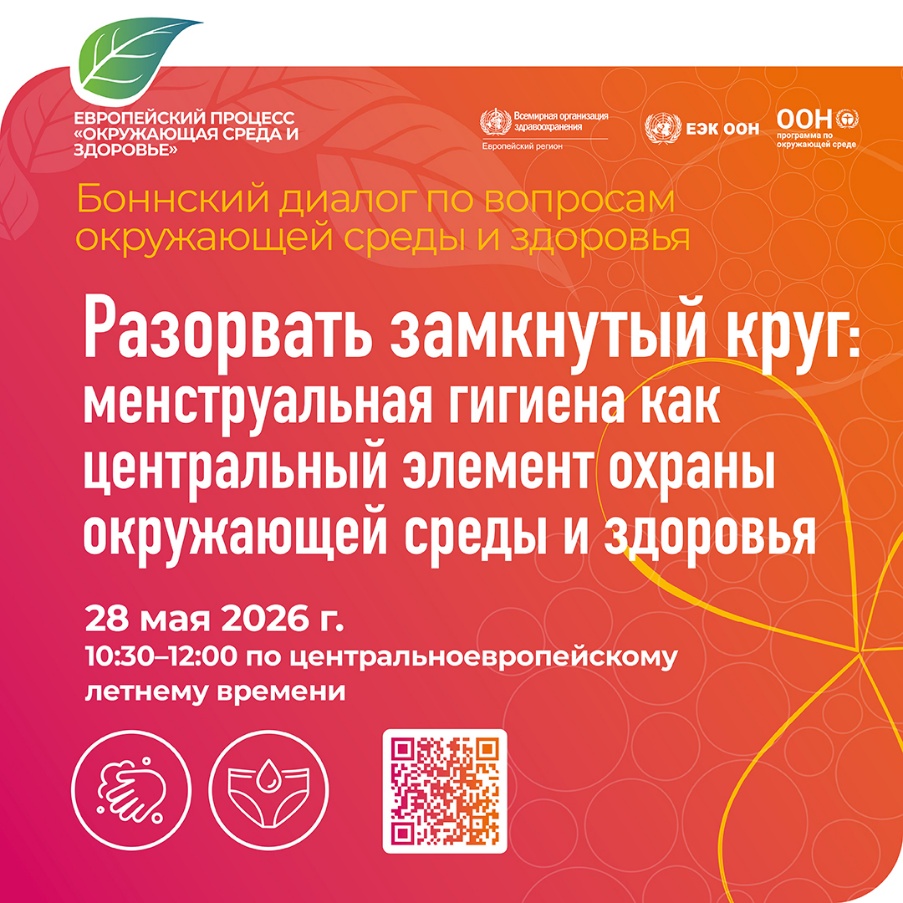
Please find attached the flyer in English and Russian. The bilingual social media tiles are also attached to share through your networks.
We look forward to seeing you there!
With kind regards,
Nino Sharashidze,
On behalf of the EHP Secretariat
***
Напоминание: Боннский диалог по вопросам окружающей среды и здоровья «Разорвать замкнутый круг: менструальная гигиена как центральный элемент охраны окружающей среды и здоровья» 28 мая 2026 г., 10:30–12:00 по центральноевропейскому летнему времени (CEST)
Кому:
члены Европейской целевой группы по окружающей среде и здоровью (ЦГОСЗ);
национальные сотрудничающие организации ВОЗ;
зарегистрированные участники.
Копии:
представители ВОЗ и руководители страновых офисов;
Секретариат BO3.
Уважаемые коллеги!
Мы рады напомнить вам, что одиннадцатый Боннский диалог по вопросам окружающей среды и здоровья состоится в четверг, 📅 28 мая 2026 г., ⏰ с 10:30 до 12:00 по центральноевропейскому летнему времени (CEST). Мероприятие будет приурочено ко Дню менструальной гигиены.
Основной темой диалога станет более эффективная поддержка менструального здоровья и создание равноправных условий за счет реализации мер политики в области окружающей среды и здоровья.
Чтобы присоединиться к диалогу на платформе Zoom, зарегистрируйтесь по ссылке: https://who.zoom.us/meeting/register/OgTukgPhSTSn238z-GYJ_w#/registration.
В приложении к данному письму находится информационная листовка на английском и русском языках, а также карточки на двух языках, которыми вы можете поделиться в своих социальных сетях.
Будем рады видеть вас в числе участников диалога!
С уважением,
Nino Sharashidze
от имени Секретариата ЕПОСЗ
From: EURO
CEH
Sent: Friday, March 27, 2026 12:50 PM
To: EURO CEH <[email protected]>
Subject: Bonn Dialogue on Environment and Health: breaking the cycle – putting menstrual hygiene at the centre of environment and health, 28 May 2026, 10:30–12:00 CEST //
For Russian version, please scroll down. Текст письма на русском языке приводится ниже
To:
Members of the European Environment and Health Task Force;
National Focal points of the Protocol on Water and Health
WHO National Counterparts;
Cc:
WHO Representatives and Heads of Country Offices;
WHO Secretariat;
Dear colleagues,
We are delighted to inform you that the WHO European Centre for Environment, Climate Change and Health is organizing the eleventh Bonn Dialogue on Environment and Health. This event will focus on placing menstrual health at the centre of environment and health policies in order to promote more equitable and supportive settings. This virtual event will take place on Thursday, 28 May 2026, 10:30–12:00 Central European Summer Time.
The event will discuss how menstrual-friendly environments can be created across schools, workplaces, health-care facilities and public spaces, and how collaboration across environment, health and education sectors can help close persistent equity gaps.
The Dialogue will feature speakers from national governments, academia, international organizations, and youth groups. They will share insights from their work and experiences, highlighting opportunities to advance supportive environments for menstrual health.
The Dialogue will be held in English with simultaneous translation into Russian.
Please register here: https://who.zoom.us/meeting/register/OgTukgPhSTSn238z-GYJ_w
For more information about the Dialogue, please see the attached flyer available in English and Russian.
The programme will be shared in due course.
We invite you to add this event to your calendars and share it widely within your professional networks.
With kind regards,
EHP Secretariat
***
Тема: Боннский диалог по вопросам окружающей среды и здоровья «Разорвать замкнутый круг: менструальная гигиена как центральный элемент охраны окружающей среды и здоровья». 28 мая 2026 г., 10:30–12:00 по центральноевропейскому летнему времени (CEST)
Кому:
Члены Европейской целевой группы по окружающей среде и здоровью
Национальные координаторы осуществления Протокола по проблемам воды и здоровья
Национальные сотрудничающие организации ВОЗ
Копии:
Представители ВОЗ и руководители страновых офисов
Секретариат ВОЗ
Уважаемые коллеги!
Мы рады сообщить вам, что Европейский центр ВОЗ по вопросам окружающей среды и здоровья организует одиннадцатый Боннский диалог по вопросам окружающей среды и здоровья, который будет посвящен привлечению внимания к менструальному здоровью как к одному из центральных элементов политики в области охраны окружающей среды и здоровья в целях формирования более справедливых и благоприятных условий. Это виртуальное мероприятие пройдет в четверг, 28 мая 2026 г., с 10:30 до 12:00 по центральноевропейскому летнему времени.
Его участники обсудят возможности для создания среды, благоприятной для менструального здоровья, в учебных заведениях, на рабочих местах, в учреждениях здравоохранения и общественных пространствах, а также методы сотрудничества между секторами охраны окружающей среды, здравоохранения и образования, способствующие устранению сохраняющихся несправедливых различий.
В Диалоге примут участие докладчики, представляющие правительства стран, научное сообщество, международные организации и группы молодежи. Они поделятся опытом и результатами своей работы, а также расскажут о различных возможностях расширения среды, благоприятной для менструального здоровья.
Диалог будет проходить на английском языке с синхронным переводом на русский.
Для участия просим вас зарегистрироваться по ссылке: https://who.zoom.us/meeting/register/OgTukgPhSTSn238z-GYJ_w.
Более подробная информация о Диалоге содержится в листовке на английском и русском языках, которая находится в приложении к данному письму.
Программа мероприятия будет направлена вам позднее.
Приглашаем вас внести это событие в свой рабочий календарь и рассказать о нем коллегам.
С уважением,
Секретариат ЕПОСЗ
---
EHP Secretariat
WHO Regional Office for Europe | European Centre for Environment,
Climate Change and Health | Bonn, Germany
E-mail: [email protected]
| Web: European
Environment and Health Process (EHP)
EUROPEAN ENVIRONMENT AND HEALTH PROCESS
Bonn Dialogue on Environment and Health
Breaking the cycle – putting menstrual hygiene at the centre of environment and health
Register for the Dialogue here
28 May 2026 10:30–12:00 Central European Summer Time
English with simultaneous translation into Russian
Introduction to the topic Menstrual health – defined as complete physical, mental and social well‑being in relation to the menstrual cycle – has increasingly been recognized as a human rights issue and a political priority, including under the environment and health agenda. The places where we spend our days – classrooms, clinics, workplaces and public spaces – can either support menstrual health or make it more difficult to attain.
Across the WHO European Region, many women and girls still face barriers undermining their dignity, comfort, health and well‑being. Significant gaps persist in access to information and menstrual products, as well as safe and adequate water, sanitation and hygiene services in schools, workplaces, health‑ care facilities and public spaces.
WHO/Europe supports countries in promoting menstrual health by advancing equitable access to water, sanitation and hygiene across institutional settings. This work is anchored in the Protocol on Water and Health; a multilateral legal instrument bringing together health and environment and water sectors in the Region.
The Protocol provides a framework for setting national targets, improving standards and surveillance, and ensuring that water, sanitation and hygiene services are accessible, adequate and sustainable for all, including efforts promoting menstrual health. Among the Protocol’s most recent tools is the 2025 document, Healthy habits, healthy schools: good practices for hand hygiene and menstrual health in schools in the pan-European region, which highlights concrete examples of how countries and local communities are advancing menstrual health through policy measures and school‑based initiatives.
Building on this momentum, the eleventh Bonn Dialogue explores what menstrual‑friendly environments look like, sparks conversation on identifying gaps and practical solutions, and discusses how environment, health and education sectors can close equity gaps.
Event details The Bonn Dialogues are a series of high‑level online events within the framework of the European Environment and Health Process, aimed at fostering discussions on selected themes and topics among policy‑makers across the WHO European Region to accelerate the implementation of the Budapest Declaration.
This online event is open to members of the Environment and Health Task Force; professionals working on water, sanitation and hygiene, education, public health, gender and human rights, and environment and climate policies at national, regional and local levels; experts and practitioners engaged in school health, youth engagement and community initiatives; as well as relevant stakeholders from nongovernmental organizations, academia and international organizations, including youth representatives.
Please mark the event in your calendars and share it with your professional networks.
Provisional programme 10:30 Welcome and introduction
• WHO Regional Office for Europe – Robb Butler, Special Representative for Climate and Health
• Ministry of Health, Lithuania – Aušra Želvienė, Health Minister’s Advisor on Public Health
10:35 Setting the scene: scientific background and evidence Moderation: Ingrida Skridaliene, Deputy Director, National Public Health Centre,Ministry of Health of Lithuania
• Keynote – Bethany Caruso, Associate Professor, Rollins School of Public Health, Emory University, United States of America
• Alina Kurusheva, independent, former youth activist and founder of Umai
10:55 Impulse round: national and international experiences Moderation: Valentina Grossi, Technical Officer, WHO European Centre for Environment, Climate Change and Health
Round 1. National perspectives (policy and implementation) • Ministry of Health, Kazakhstan – Elena Shaimuratovna Takambayeva,
Head of the Department for Control of Public Utilities • Ministry of Health, North Macedonia – Slobodanka Temova
Anchevska, Head of Unit, Department for European integration and international cooperation
• Deutsche Gesellschaft für Internationale Zusammenarbeit [German Agency for International Cooperation] – Stefan Mager, Head of Infrastructure – Energy, Water, Mobility
Round 2. International perspectives and enabling frameworks • United Nations Educational, Scientific and Cultural Organization –
Xavier Hospital, Team Leader, Safe Healthy Schools and Data • WASH United – Ina Jurga, International Coordinator of Menstrual
Hygiene Day and Technical Lead for Menstrual Health & Hygiene
Moderated discussion Selected questions and reflections from participants and speakers
11:55 Closing remarks • WHO Regional Office for Europe – Francesca Racioppi, Head of the
WHO European Centre for Environment, Climate Change and Health
© World Health Organization 2026. Some rights reserved. This work is available under the CC BY‑NC‑SA 3.0 IGO license.
Одиннадцатый Боннский диалог по вопросам окружающей среды и здоровья
Разорвать замкнутый круг: менструальная гигиена как центральный элемент охраны окружающей среды и здоровья
Чтобы зарегистрироваться для участия в диалоге, пройдите по ссылке.
28 мая 2026 г. 10:30–12:00 по центральноевропейскому летнему времени
Рабочие языки: английский с синхронным переводом на русский.
ЕВРОПЕЙСКИЙ ПРОЦЕСС «ОКРУЖАЮЩАЯ СРЕДА И ЗДОРОВЬЕ»
Знакомство с темой Менструальное здоровье, которое определяется как состояние полного физического, психического и социального благополучия в контексте менструального цикла, все чаще рассматривается как один из аспектов прав человека и приоритетный стратегический вопрос, в том числе в рамках повестки дня в области защиты окружающей среды и охраны здоровья. Зоны, в которых мы проводим время – учебные и медицинские учреждения, рабочие места и общественные пространства, – могут как способствовать укреплению менструального здоровья, так подрывать его.
Многие женщины и девочки на всей территории Европейского региона ВОЗ до сих пор сталкиваются с ограничениями, которые оказывают негативное влияние на их достоинство, чувство комфорта, здоровье и благополучие. Сохраняются серьезные проблемы в части доступа к информации, к средствам гигиены, а также к безопасным и достаточным услугам водоснабжения, санитарии и гигиены в учебных заведениях, на рабочих местах, в учреждениях здравоохранения и общественных пространствах.
Европейское региональное бюро ВОЗ оказывает странам поддержку в области укрепления менструального здоровья путем расширения справедливого доступа к услугам водоснабжения, санитарии и гигиены в различных институциональных условиях. Эту деятельность определяет Протокол по проблемам воды и здоровья – многосторонний правовой акт, объединяющий сферы здравоохранения, охраны окружающей среды и водного хозяйства в Регионе.
Протокол содержит рамочные механизмы для определения национальных целевых показателей, ужесточения стандартов и укрепления эпиднадзора, а также для обеспечения того, чтобы услуги водоснабжения, санитарии и гигиены (включая усилия по поддержке менструального здоровья) носили общедоступный, достаточный и устойчивый характер. В число новых вспомогательных инструментов Протокола входит опубликованный в 2025 г. документ под названием Healthy habits, healthy schools: good practices for hand hygiene and menstrual health in schools in the pan-European region [Здоровые привычки, здоровые школы: надлежащие практики обеспечения гигиены рук и менструального здоровья в школах общеевропейского региона] (на англ. яз.), в котором описаны конкретные примеры укрепления менструального здоровья в различных странах и местных сообществах за счет мер политики и школьных инициатив.
В целях наращивания темпов этой работы одиннадцатый Боннский диалог будет посвящен изучению компонентов среды, благоприятной для менструального здоровья, выявлению проблем и поиску практических решений, а также обсуждению роли секторов охраны окружающей среды, здравоохранения и образования в устранении несправедливых различий.
Информация о мероприятии Боннские диалоги – это серия онлайновых мероприятий высокого уровня в рамках Европейского процесса «Окружающая среда и здоровье», которые призваны стимулировать дискуссии по отдельным вопросам и темам между разработчиками политики в Европейском регионе ВОЗ в целях ускорения реализации Будапештской декларации.
К участию в этих онлайновых встречах приглашаются члены Европейской целевой группы по окружающей среде и здоровью; специалисты национального, регионального и местного уровней, работающие в сферах водоснабжения, санитарии и гигиены, образования, общественного здравоохранения, гендерного равноправия и защиты прав человека, а также политики охраны окружающей среды и борьбы с изменением климата; эксперты и практикующие специалисты в области охраны здоровья школьников, работы с молодежью и местных инициатив; представители тематических негосударственных, научно-образовательных и международных организаций, в том числе делегаты от молодежи.
Просим вас внести это событие в свой календарь мероприятий и рассказать о нем коллегам.
Предварительная программа
10:30 Приветственное слово и представление участников • Европейское региональное бюро ВОЗ – Robb Butler, специальный
представитель по вопросам климата и здравоохранения • Министерство здравоохранения Литвы – Aušra Želvienė, советник министра
здравоохранения по вопросам общественного здравоохранения
10:35 Обзор ситуации: научные предпосылки и фактические данные Модератор: Ingrida Skridalienė, заместитель директора Национального центра общественного здравоохранения при Министерстве здравоохранения Литвы
• Основной докладчик: Bethany Caruso, доцент факультета общественного здравоохранения им. О. У. Роллинса, Институт Эмори, Соединенные Штаты Америки
• Алина Курушева, независимый участник, бывший молодежный активист и основатель проекта «Умай»
11:00 Этап сбора информации: обмен национальным и международным опытом Модератор: Valentina Grossi, технический специалист Европейского центра ВОЗ по вопросам окружающей среды, изменения климата и здоровья
Этап 1. Национальные подходы (политика и ее реализация) • Министерство здравоохранения Казахстана – Елена Шаймуратовна
Такамбаева, руководитель Управления контроля за коммунальными объектами
• Министерство здравоохранения Северной Македонии – Slobodanka Temova Anchevska, руководитель отдела Департамента европейской интеграции и международного сотрудничества
• Немецкое агентство международного сотрудничества (Deutsche Gesellschaft für Internationale Zusammenarbeit) – Stefan Mager, руководитель отдела энергетической, водной и транспортной инфраструктуры
Этап 2. Международные подходы и стимулирующие рамочные механизмы • Организация Объединенных Наций по вопросам образования, науки и
культуры – Xavier Hospital, руководитель группы по безопасной и здоровой школьной среде и данным
• Неправительственная организация WASH United – Ina Jurga, международный координатор Дня менструальной гигиены и технический руководитель направления «Менструальное здоровье и гигиена»
Организованная дискуссия Избранные вопросы и комментарии от участников и докладчиков
11:55 Заключительное выступление • Европейское региональное бюро ВОЗ – Francesca Racioppi, руководитель
Европейского центра ВОЗ по вопросам окружающей среды, изменения климата и здоровья
© Всемирная организация здравоохранения, 2026 г. Некоторые права защищены. Данная работа распространяется на условиях лицензии CC BY-NC-SA 3.0 IGO.
EUROPEAN ENVIRONMENT AND HEALTH PROCESS
Bonn Dialogue on Environment and Health
Breaking the cycle – putting menstrual hygiene at the centre of environment and health
Register for the Dialogue here
28 May 2026 10:30–12:00 Central European Summer Time
English with simultaneous translation into Russian
Introduction to the topic Menstrual health – defined as complete physical, mental and social well‑being in relation to the menstrual cycle – has increasingly been recognized as a human rights issue and a political priority, including under the environment and health agenda. The places where we spend our days – classrooms, clinics, workplaces and public spaces – can either support menstrual health or make it more difficult to attain.
Across the WHO European Region, many women and girls still face barriers undermining their dignity, comfort, health and well‑being. Significant gaps persist in access to information and menstrual products, as well as safe and adequate water, sanitation and hygiene services in schools, workplaces, health‑ care facilities and public spaces.
WHO/Europe supports countries in promoting menstrual health by advancing equitable access to water, sanitation and hygiene across institutional settings. This work is anchored in the Protocol on Water and Health; a multilateral legal instrument bringing together health and environment and water sectors in the Region.
The Protocol provides a framework for setting national targets, improving standards and surveillance, and ensuring that water, sanitation and hygiene services are accessible, adequate and sustainable for all, including efforts promoting menstrual health. Among the Protocol’s most recent tools is the 2025 document, Healthy habits, healthy schools: good practices for hand hygiene and menstrual health in schools in the pan-European region, which highlights concrete examples of how countries and local communities are advancing menstrual health through policy measures and school‑based initiatives.
Building on this momentum, the eleventh Bonn Dialogue explores what menstrual‑friendly environments look like, sparks conversation on identifying gaps and practical solutions, and discusses how environment, health and education sectors can close equity gaps.
Event details The Bonn Dialogues are a series of high‑level online events within the framework of the European Environment and Health Process, aimed at fostering discussions on selected themes and topics among policy‑makers across the WHO European Region to accelerate the implementation of the Budapest Declaration.
This online event is open to members of the Environment and Health Task Force; professionals working on water, sanitation and hygiene, education, public health, gender and human rights, and environment and climate policies at national, regional and local levels; experts and practitioners engaged in school health, youth engagement and community initiatives; as well as relevant stakeholders from nongovernmental organizations, academia and international organizations, including youth representatives.
Please mark the event in your calendars and share it with your professional networks.
Provisional programme 10:30 Welcome and introduction
• WHO Regional Office for Europe – Robb Butler, Special Representative for Climate and Health
• Ministry of Health, Lithuania – Aušra Želvienė, Health Minister’s Advisor on Public Health
10:35 Setting the scene: scientific background and evidence Moderation: Ingrida Skridaliene, Deputy Director, National Public Health Centre,Ministry of Health of Lithuania
• Keynote – Bethany Caruso, Associate Professor, Rollins School of Public Health, Emory University, United States of America
• Alina Kurusheva, independent, former youth activist and founder of Umai
10:55 Impulse round: national and international experiences Moderation: Valentina Grossi, Technical Officer, WHO European Centre for Environment, Climate Change and Health
Round 1. National perspectives (policy and implementation) • Ministry of Health, Kazakhstan – Elena Shaimuratovna Takambayeva,
Head of the Department for Control of Public Utilities • Ministry of Health, North Macedonia – Slobodanka Temova
Anchevska, Head of Unit, Department for European integration and international cooperation
• Deutsche Gesellschaft für Internationale Zusammenarbeit [German Agency for International Cooperation] – Stefan Mager, Head of Infrastructure – Energy, Water, Mobility
Round 2. International perspectives and enabling frameworks • United Nations Educational, Scientific and Cultural Organization –
Xavier Hospital, Team Leader, Safe Healthy Schools and Data • WASH United – Ina Jurga, International Coordinator of Menstrual
Hygiene Day and Technical Lead for Menstrual Health & Hygiene
Moderated discussion Selected questions and reflections from participants and speakers
11:55 Closing remarks • WHO Regional Office for Europe – Francesca Racioppi, Head of the
WHO European Centre for Environment, Climate Change and Health
© World Health Organization 2026. Some rights reserved. This work is available under the CC BY‑NC‑SA 3.0 IGO license.